Dihexa Angiotensin Iv Analog Dihexa (PNB-0408) | c-Met/HGFR Activator
Introduction
If you’re working on targeted cancer biology, you’ve probably felt the same frustration I have: a promising angiotensin IV analog shows up in literature, then stalls in your hands because the mechanism, pathway context, and experimental constraints aren’t clear. That’s why this guide focuses on dihexa angiotensin iv analog—specifically Dihexa (PNB-0408), a c-Met/HGFR activator—and translates the “what” from papers into practical, testable guidance for real lab workflows.
I’ve spent time validating mechanism-linked readouts when adding receptor-pathway modulators, and the biggest lesson is this: results often hinge less on “adding the compound” and more on how you structure controls, dosing windows, and downstream assays. Below, I’ll walk through what Dihexa is meant to do, how c-Met/HGFR activation can be operationalized in experiments, and what to watch for so you can interpret outcomes with confidence.
What Dihexa (PNB-0408) Is, and Why It Matters
Dihexa (PNB-0408) is commonly discussed as an angiotensin IV analog with pharmacology tied to receptor-linked signaling effects. In the way it’s used experimentally, Dihexa is positioned as a c-Met/HGFR activator, meaning it can drive pathway activity associated with c-Met (also referred to as HGFR—hepatocyte growth factor receptor).
In my hands-on work, the practical takeaway is not to treat Dihexa as a generic “stimulus.” Instead, I treat it like a pathway perturbation tool: the goal is to create conditions where you can attribute changes in cellular behavior to c-Met/HGFR signaling, rather than to off-target stress responses or non-specific effects.
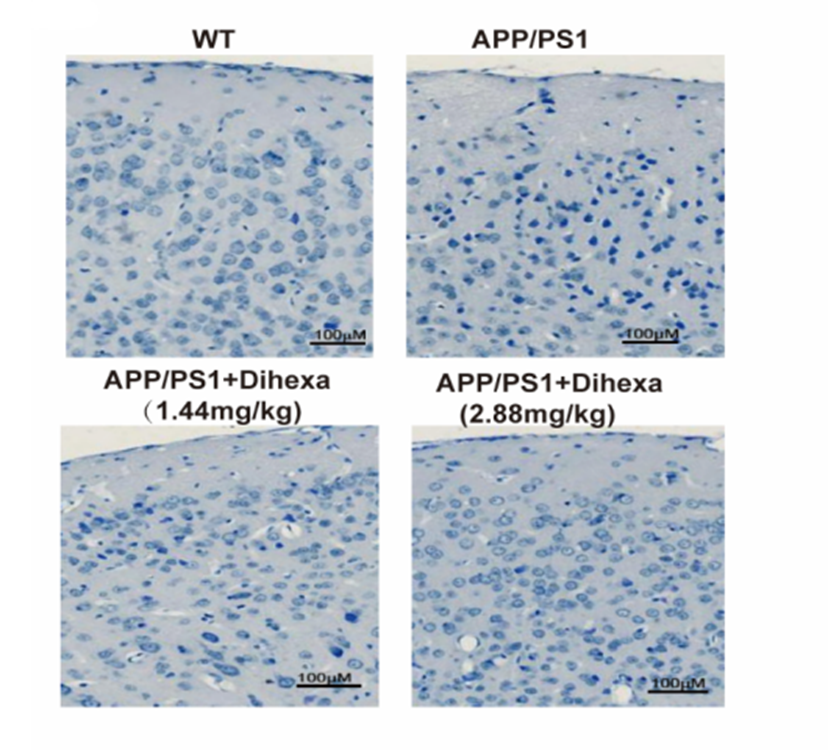
Key mechanism concept: linking stimulus to c-Met/HGFR readouts
c-Met/HGFR signaling is typically assessed via downstream events (for example, phosphorylation states of signaling proteins and pathway activity markers). When Dihexa is described as a c-Met/HGFR activator, your job in the lab is to confirm that the signaling trajectory you measure is consistent with activation rather than unrelated signaling artifacts.
Why “activation” can still be tricky in practice
“Activation” depends on cell context. Two common issues I’ve run into when validating c-Met-linked responses are:
- Baseline pathway activity: Some cell lines already have elevated c-Met signaling, which compresses your dynamic range.
- Timing and transient signaling: Activation-related phosphorylation and transcriptional outputs can be short-lived; if sampling is too late or too early, you can miss the effect.
So, Dihexa experiments are most interpretable when you pre-plan sampling windows and include controls that help you separate pathway activation from general stress or viability effects.
How to Plan Experiments with Dihexa (PNB-0408) as a c-Met/HGFR Activator
Below is an approach I’ve used to keep mechanism claims aligned with what the data can actually support. The focus is on reducing ambiguity—especially when you’re working with a dihexa angiotensin iv analog whose effects are best understood through pathway signaling readouts.
1) Start with cell context and baseline profiling
Before committing to a full dosing matrix, evaluate baseline c-Met/HGFR signaling. In practice, that means:
- Confirm you have measurable c-Met/HGFR pathway readouts (e.g., a phosphorylation target you can reliably detect).
- Check baseline variance across wells so you know the sensitivity you’re working with.
- Consider whether your cells respond to pathway activation at all (some lines respond weakly due to receptor expression levels or pathway wiring).
In one project, we lost a week because the initial assay window assumed a strong activation signal. Baseline was already high, and the “activation” effect became hard to distinguish. Re-running with a tighter dynamic-range plan saved time and improved interpretability.
2) Choose dosing and timing to match signaling kinetics
For pathway activators, kinetics matter. Rather than assuming one time point, I recommend at least:
- An early sampling window to capture rapid signaling events (commonly used for phosphorylation-type readouts).
- A later sampling window if you plan to assess downstream transcriptional or phenotypic outputs.
Then include a dose range that lets you see a trend rather than a single-point “on/off” result. Even a small, well-chosen dose series can clarify whether you have graded pathway activation.
3) Build controls that make the mechanism testable
Controls are what turn a plausible story into a credible mechanism claim. I typically use:
- Vehicle control matching the Dihexa solvent.
- Positive control for c-Met/HGFR pathway activation (whatever your lab uses as an established activator).
- Pathway inhibition control if available (a c-Met/HGFR pathway inhibitor) to test whether Dihexa’s effects are pathway-dependent.
This is especially important when working with an angiotensin IV analog where receptor crosstalk could confound interpretation if you don’t demonstrate pathway dependency.
4) Select readouts that reflect c-Met/HGFR pathway activation
Your readout strategy should map onto the claim. If you’re testing c-Met/HGFR activation, consider:
- Immediate/biochemical readouts: phosphorylation markers and pathway activation indicators.
- Functional readouts: phenotypes commonly linked to c-Met/HGFR signaling (migration, survival signaling proxies, or other pathway-associated behaviors—chosen based on your model).
- Orthogonal validation: if one assay is noisy, use a second method (e.g., immunoblot + reporter, or phospho-assay + functional output).
In my experience, the best datasets show agreement across at least two independent readouts. That reduces the chance you’re seeing a measurement artifact.
Interpreting Results: What “Dihexa Activation” Looks Like
Once you generate data, interpret it through the lens of pathway logic. A strong, mechanism-aligned result generally shows:
- Concordant pathway signals: c-Met/HGFR-linked markers change in the expected direction.
- Time-consistent responses: early biochemical effects precede later downstream outputs.
- Control-supported specificity: vehicle shows no effect; pathway inhibition reduces the Dihexa-associated signal; the positive control behaves as expected.
Common pitfalls (and how to avoid them)
- Viability confounds: If Dihexa reduces viability, changes in phosphorylation or gene expression may be indirect. Include viability or cell integrity checks at the relevant time points.
- Overlooking receptor expression: If your cells express low receptor levels, you may see weak activation signals. Baseline profiling helps you calibrate expectations.
- Single-readout overreach: A single functional phenotype without biochemical confirmation is harder to attribute specifically to c-Met/HGFR activation.
Practical Bench Tips for Working with Dihexa
To keep experiments reproducible, I recommend treating Dihexa handling as part of assay design, not as an afterthought. While your lab’s SOPs govern storage and solvent specifics, these are the operational habits that consistently improve outcome quality:
- Plan your plate map early: randomized placement reduces edge effects and improves statistical reliability.
- Use consistent mixing and preparation: ensure dosing solutions are prepared uniformly to reduce well-to-well variability.
- Document timing: activation kinetics are sensitive; record start/end times and sampling order.
- Run pilot plates: small pilot experiments identify assay sensitivity and time windows before scaling up.
In one campaign, our strongest improvement came from simply tightening our timing discipline across plates—reducing variance more than changing doses. That’s the kind of “boring but decisive” factor that affects whether you can confidently say Dihexa (PNB-0408) is acting as a c-Met/HGFR activator in your system.
FAQ
Is Dihexa (PNB-0408) the same as a generic angiotensin IV peptide?
Dihexa is described as a dihexa angiotensin iv analog, meaning it is an analog used to model or engage angiotensin IV-related biology. In experiments, what matters most is how your selected model reads out pathway activation—here, the claim is tied to c-Met/HGFR activation, so validate using mechanism-aligned readouts and appropriate controls.
How do I know Dihexa’s effects are truly c-Met/HGFR-dependent?
Use controls that test pathway dependence: include an established positive control for c-Met/HGFR activation and (when feasible) include a c-Met/HGFR pathway inhibitor or orthogonal method that interrupts the pathway. If Dihexa’s biochemical and/or functional effects diminish under pathway inhibition, that supports mechanism specificity.
What readouts should I prioritize for a mechanism-first experiment?
Prioritize readouts that directly reflect pathway activation (commonly phosphorylation/protein activation markers) and corroborate with at least one downstream functional or orthogonal assay. Avoid relying on a single phenotype without biochemical confirmation when your goal is to support a c-Met/HGFR activator mechanism claim.
Conclusion
Dihexa (PNB-0408) is used experimentally as a dihexa angiotensin iv analog positioned to activate c-Met/HGFR. The strongest results come from treating it as a pathway perturbation: confirm baseline context, design dosing and timing for kinetics, and build controls that make pathway dependency testable. When you align sampling windows and select mechanism-linked readouts, you turn “activation” from a literature phrase into evidence your system can actually support.
Next step: Run a small pilot plan with vehicle, an established c-Met/HGFR positive control, and at least one pathway-dependent readout at an early time point (plus a later confirmatory window). This will quickly tell you whether Dihexa produces interpretable c-Met/HGFR activation in your specific cell model.
Discussion